






separador.png
Search

Global Maritime

Strengthening Albania’s capacity to implement and enforce Anti-fouling Systems Convention

Source: IMO A national in-person workshop to assist Albania with implementing the IMO Anti-fouling Systems (AFS) Convention has taken place in Durres, Albania (28-29 September 2022). The AFS Convention sets controls on certain harmful substances in anti-fouling systems, including organotin compounds (TBTs) and, from 2023, cybutryne. Some 20 government officials were sensitized in the actions Albania should take at a national level to fully implement and enforce the AFS Convention. The workshop covered technical and regulatory aspects of anti-fouling systems and assessed whether Albania has an adequate national legal framework in place allowing for transposition of the AFS Convention. The workshop programme included presentations and a site visit to a local shipyard, which offered participants the opportunity to see in practice and discuss relevant aspects affecting implementation and enforcement including survey, inspection and waste management. The workshop was requested by the Administration of Albania as the country is in the process of acceding to the AFS Convention. The workshop was delivered through IMO’s Integrated Technical Cooperation Programme (ITCP). Since the adoption of the International Convention on the Control of Harmful Anti-fouling Systems on Ships (AFS Convention) in 2001, IMO has run a series of national and regional workshops to encourage

Leer más »
14% of the Port of Valencia’s electrical energy will be of solar origin

Valenciaport approves the second photovoltaic plant project to be located on the Valencia Terminal Europa vehicle storage facility The solar installation will occupy an area of 27,700 m2 -equivalent to four football pitches-, will generate over 8,380 Mwh/year and will have a budget more than 17 million euros This project will generate 11% of the energy consumed and will be added to the plant already put out to tender, which will be located on the Príncipe Felipe dock and will produce another 3% Aurelio Martínez stresses “Valenciaport’s commitment to the fight against climate change with projects underway to become an emission neutral port by 2030 and contribute to the environmental sustainability of our surroundings” This project is financed by the Next Generation funds of the European Union and the Recovery, Transformation and Resilience Plan of the Spanish Government Tenders have also been invited for the solar installation for the Port of Gandía, which will make the port the first European port to be energy self-sufficient Source: Valenciaport The 14% of the electrical energy consumed by the Port of Valencia will be generated self-sufficiently with the two solar plants to be installed in the port precinct. The Board of Directors of

Leer más »
Perú: Proyecto Anglo American – Quellaveco realiza primera prueba de embarque de concentrado de cobre en el Terminal Portuario Engie

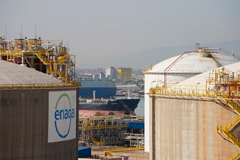
Fuente: APN Perú El Terminal Portuario Engie, ubicado en la provincia de Ilo (Moquegua), recibió, el 24 de setiembre, la nave Balabac Island, de bandera panameña, para realizar el primer embarque de 35,400 TM de concentrado de cobre, con destino a China y Japón. Ello, como parte de la primera prueba de funcionamiento del nuevo terminal portuario del proyecto minero Quellaveco. El proyecto Quellaveco, desarrollado por Anglo American en sociedad con la corporación Mitsubishi, constituye unos de los yacimientos de cobre más grandes del mundo, el cual contempla una inversión total de US$ 5,500 millones, durante 36 años de vida útil de la mina, programando embarcar 1,100,000 TM de cobre por año, estimados para los primeros 10 años. El Estado peruano, a través del Ministerio de Energía y Minas (Resolución Directoral N° 0891-2022-MINEM/DGM) emitió la autorización para el inicio de la operación comercial de Quellaveco, cuya producción de cobre peruano comenzará a ser exportada al mundo desde la zona sur del Perú. La instalación portuaria, de propiedad de Engie, cuenta con un almacén de 80 mil toneladas y un sistema automatizado de embarque – Shiploader de alta tecnología, en el cual se moviliza el mineral desde una faja transportadora a

Leer más »
Colombia: Nuevas condiciones de navegación en el canal de acceso de Barranquilla, Dimar

Fuente: Dimar La Dirección General Marítima (Dimar), a través de la Capitanía de Puerto de Barranquilla, informa que de acuerdo con los análisis realizados por la alta dinámica en el tránsito de embarcaciones, sedimentación, cambios en los niveles del río Magdalena (análisis de planos batimétricos tomados diariamente del canal de acceso al Puerto) y trabajos realizados durante el dragado, se permite comunicar las condiciones de navegación para las embarcaciones que arriban y zarpan a la zona portuaria de la ciudad: ARRIBOS-ZARPES BUQUES ESLORAS (m) CALADOS (metros) CONDICIONES DE OPERACIÓN OBSERVACIONES Desde 150Hasta 180 Hasta 8.8 Sin restricción 60 centímetros de asiento positivo mínimo.Dentro de limites océanos atmosféricos para ejecución de maniobras. Mayores a 180 Hasta 8.8 Luz día 60 centímetros de asiento positivo mínimo.Dentro de limites océanos atmosféricos para ejecución de maniobras. Se procederá a realizar análisis en la maniobrabilidad de cada embarcación que se encuentre sobre los límites máximos permitidos y se estará informando sobre los avances del sector de acuerdo con las intervenciones y afectaciones que se vienen presentando; asimismo, se estará informando previamente las consideraciones de seguridad que requieran ser adoptadas. La Autoridad Marítima continuará monitoreando la evolución de las condiciones de navegabilidad con personal profesional especializado,

Leer más »
Buen viento para el turismo en América Latina y el Caribe

El número de pasajeros en América Latina y del Caribe muestra, a julio de este año, una recuperación sólida y prometedora. Fuente: ALTA La reactivación del turismo ha sido una de las claves para superar los efectos de la pandemia del COVID-19 en el mundo. A medida que las restricciones de viaje se fueron levantando se comenzó a ver un fenómeno conocido como “turismo de venganza” en el que las personas no querían quedarse más en casa y retomaron los viajes, visitas pendientes a seres queridos, así como aprovecharon la posibilidad de trabajar remoto desde cualquier lugar. De acuerdo con el Consejo Mundial de Viajes y Turismo (WTTC por su nombre en inglés), el proceso de reactivación mundial representó para 2021 un total de 289.5 millones de empleos para la industria, de los cuales 18.2 millones fueron nuevos empleos (6.7% de crecimiento vs. el año anterior). Es decir que 1 de cada 11 empleos en el mundo para 2021 fueron generados por el sector viajes y turismo. Proyecciones de la organización estiman que, entre el 2022 y 2032, el sector tendrá un crecimiento anual promedio de 5.8%, lo que representa más del doble del crecimiento promedio anual de la economía

Leer más »
6 Digit HS-Code mandatory for all Global Cargo

Source: MAERSK There has been an increasing focus on the accurate commodity classification under which many Customs authorities are marking Harmonised Commodity Code mandatory in the Customs Manifest declaration. Maersk will be implementing a policy to collect these 6 digit Harmonized System (HS) Codes as published by World Customs Organisation (WCO) as part of the shipping Instructions for all global cargo movements. This is to ensure Maersk and it’s Customers are compliant on providing accurate commodity information right first time to Customs authorities. We will implement our policies in two phases: 1st October 2022: An e-mail will be sent out reminding you of the need for the missing information in case not submitted via the shipping instructions. 1st November 2022: Shipping Instructions received missing or with an incomplete 6-Digit HS code will not be processed. An e-mail will be sent requesting for the information to be provided until when a draft bill of lading will not be available. This policy will be applicable for all Global Export, transhipment and Import cargo movements with Maersk. How to Submit HS Code in Shipping Instructions on Maersk.com When you are submitting your Shipping Instructions online via Maersk.com, please input the 6-digit HS Code

Leer más »
Valenciaport, a reference model of port-city and decarbonisation for the World Bank

Valenciaport has been invited by the World Bank to present its good practices in the port-city relationship An example of city-port collaboration is the dedication of an area of 230,000 square metres of port land for citizen use within the framework of the Nazareth Plan In 2015, the PAV created the Advisory Committees of the ports of Valencia, Sagunto and Gandía, chaired by the mayors, as a meeting point to reach a consensus on city-port integration actions Source: Valenciaport Valenciaport has positioned itself as a benchmark in the relationship between the port and the city, favouring the harmonisation of the port environment to make it closer to the city with milestones such as the transfer to the city of the Balcón al Mar in 2013 or more recently the Special Plan of the South Zone 1 for the Nazaret area. The Port Authority of Valencia (PAV) has been invited by the World Bank to present its good practices in the port-city relationship, digitalisation and decarbonisation as an international reference in the framework of the “Green Transport in Turkey” programme held in the city of Izmir (Turkey). The head of Strategic Planning and Innovation of the PAV, Juan Manuel Díez Orejas,

Leer más »
Support to harmonize ballast water management procedures in Mediterranean Sea

Source: IMO A new initiative to support the prevention and control of marine biological invasions through ships’ ballast water in the Mediterranean Sea has been initiated.   The initiative will focus on developing harmonized procedures for the uniform implementation of specific aspects of the Ballast Water Management Convention (BWM Convention) for which regional harmonization in the Mediterranean Sea region is essential. The BWM Convention requires ships to manage their ballast water so that harmful aquatic organisms and pathogens are removed or rendered harmless before the ballast water is released into a new location. This protects biodiversity and resources by preventing the spread of invasive aquatic species as well as potentially harmful pathogens.  The aim of the initiative is to promote the development of coordinated efforts and management measures to address potentially harmful invasions of aquatic species throughout the Mediterranean Sea region. In particular, the project will address exemptions under regulation A-4 of the BWM Convention, including relevant regional protocols for port surveys and risk assessments, and the designation of ballast water exchange areas, while further aspects to be considered will also include sediment reception facilities, pre-arrival reporting procedures, contingency measures and additional measures under regulation C-1 of the BWM Convention. This activity will

Leer más »
How to achieve truly integrated logistics?

Source: MAERSK Globally, many companies can claim to manage end-to-end logistics, however, not all of them are executing it in a way that is smooth and ensures the right supply chain management. End-to-end integrated logistics is not just about covering the entire logistics process and being informed about any changes, but it is about being able to make real-time supply chain management decisions in any block of the chain, any logistics functions and any location. Most importantly, the entire process has to be tailored considering each company’s goals and needs. The biggest obstacles to achieve end-to-end The two main obstacles in reaching true end-to-end logistics are speed and cost, however within the process to achieve an integrated logistics, the current context must be also analysed. 1. When it comes to speed, to keep a competitive advantage in the market, the key in lifestyle and retail industries is to adopt new trends or changes in demand as soon as possible. Therefore, the speed of deliveries or the agility in applying changes – such as destination change, essentially need to improve, otherwise the end-to-end process won’t be delivering the expected results. An important factor about time is the ability to make decisions

Leer más »
Updated analysis of MARPOL Annex VI

Source: IMO The IMO-Norway GreenVoyage2050 Project has released an updated version of its popular clause-by-clause analysis of MARPOL Annex VI, which addresses air pollution from ships, in the six official IMO languages. The document provides a breakdown explanation of each regulation and it is intended to be a useful resource for countries seeking to draft legislation to incorporate MARPOL Annex VI into national law. Minglee Hoe, IMO GreenVoyage2050 Project Technical Analyst said: “At IMO, we know how vital it is that all countries can access information about environmental regulations that will aid them in understanding it as well as drafting legislation for their national laws. Our original clause-by-clause analysis was designed to facilitate greater transparency and understanding of MARPOL Annex VI and we are very pleased to release this updated version of this important resource.” The revised clause-by-clause analysis has been updated to reflect major amendments to MARPOL Annex VI, which were adopted by the IMO Marine Environment Protection Committee (MEPC) at its 76th session in June 2021. Most notably, these include regulations relating to the Energy Efficiency Existing Ship Index (EEXI) and the Carbon Intensity Indicator (CII), and reflects the renumbering of provisions in the 2021 Revised MARPOL Annex VI, set out in Resolution

Leer más »