













separador.png
Search

Global Maritime

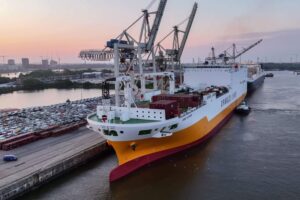
Colombia: Calado de 9.5 con restricciones nocturnas para la navegación en el canal de acceso al Puerto de Barranquilla

Fuente: Dimar La Dirección General Marítima (Dimar), a través de la Capitanía de Puerto de Barranquilla, informa sobre los cambios en la navegabilidad del puerto, que permiten el tránsito de naves de 9.5 metros de calado. De acuerdo con los análisis realizados por la alta dinámica en el tránsito de embarcaciones, sedimentación, cambios en los niveles del río Magdalena en temporada seca (análisis de planos batimétricos tomados diariamente del canal de acceso al Puerto), actualmente las embarcaciones que arriban y zarpan manejan las siguientes condiciones: DESDE KILÓMETRO -2 HASTA EL KILÓMETRO 13 BUQUES ESLORAS (metros) CALADOS(metros) CONDICIONES DE OPERACIÓN OBSERVACIONES  Hasta 200   Hasta 9.5   Sin restricción 30 centímetros de asiento positivo mínimo.Dentro de límites océano atmosféricos para ejecución de maniobras.  DESDE KILÓMETRO 13 HASTA EL KILÓMETRO 27 BUQUES ESLORAS (metros) CALADOS(metros) CONDICIONES DE OPERACIÓN OBSERVACIONES  Hasta 200   Hasta 9.5   Diurno 30 centímetros de asiento positivo mínimo.Dentro de límites océano atmosféricos para ejecución de maniobras.   Hasta 200       Hasta 9.2               Nocturno 30 centímetros de asiento positivo mínimo.Dentro de límites océano atmosféricos para ejecución de maniobras.  Se realizará el análisis en la maniobrabilidad de cada embarcación que se encuentre sobre los límites máximos permitidos y se notificará sobre los avances de acuerdo con las intervenciones y afectaciones, además del estudio

Leer más »
Port of Long Beach sees reduced cargo

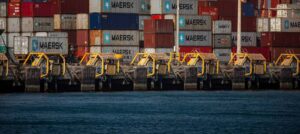
SHIFTS IN CONSUMER DEMAND, SHIPPING PATTERNS LEAD TO DECLINE Source: Port of Long Beach Softened consumer spending, increased prices driven by inflation and a shift in trade routes contributed to a dip in shipments moving through the Port of Long Beach in January. Dockworkers and terminal operators moved 573,772 twenty-foot equivalent units (TEUs) last month, down 28.4% from January 2022, which was the Port’s busiest January on record. Imports decreased 32.3% to 263,394 TEUs and exports declined 14.2% to 105,623 TEUs. Empty containers moving through the Port were down 29% to 204,755 TEUs. “We are taking aggressive steps to meet a new set of challenges for the new year,” said Port of Long Beach Executive Director Mario Cordero. “I remain optimistic that we will recapture market share and develop projects that will enhance our long-term growth, sustainable operations and the reliable movement of goods through the Port of Long Beach.” “We’re confident we will grow cargo volume by working with our industry stakeholders,” said Long Beach Harbor Commission President Sharon L. Weissman. “We are focused on investing in infrastructure projects that will improve air quality and make us more competitive.”  Economists say inflation is slowing for purchased goods and may

Leer más »
Step by step – our pathway to decarbonising our operations

APM Terminals’ pathway to decarbonisation is based on the increased use of renewable energy in owned and operated terminals, including a commitment to reach net zero across all scopes by 2040. This includes a switch to renewable electricity, direct electrification, battery electric mobile equipment, and moving from fossil to green fuels whenever possible. Source: APM Terminals As a significant share of APM Terminals’ emissions come from purchased electricity (so called scope two emissions), a near-term priority for us is to double down on switching to renewable electricity from on-site or offsite sources. During 2022 we took several actions on this front including switching to full operations on renewable electricity for eight terminals in Europe and Port Elizabeth, USA, based on purchase of renewable electricity from local utilities, and we commissioned a 1 MW onsite solar plant in Pipavav, India. APM Terminals also purchased over 180 pieces of electric or hybrid container handling equipment in 2022. Addressing challenges starts with a plan The challenge in addressing terminal emissions is the fragmented footprint across almost 4000 pieces of equipment and nearly 40 different locations with unique infrastructure, regulatory and concession context. To tackle this, we have developed and implemented local terminal end-to-end

Leer más »
On the road to digitalisation in freight forwarding

Source: MAERSK Digitalisation is shaking up the world of logistics, opening the doors to greater visibility, connectivity and agility. For the freight forwarding industry, the application of these new technologies has shown huge potential to simplify operations. However, it also presents a strategic challenge and a delicate balancing of priorities, investment, customer demand and capacity. All while navigating the industry’s complexity and fragmentation. Digitalisation is the use of digital technologies to change a business model and provide new revenue and value-adding opportunities. The COVID-19 pandemic, which brought massive supply chain disruptions and huge growth in ecommerce, accelerated digitalisation in freight forwarding. As the International Federation of Freight Forwarders Association points out, the pandemic exacerbated the need for simplification and supply chain resilience, which digitalisation helped achieve. The pandemic also supported the growth of digital freight forwarders. Digital forwarders use technologies to organise and coordinate the movement of goods – everything from taking bookings, managing documentation, tracking shipments, and for quotations and invoicing. The digital freight forwarding market, which accounts for about 8% of the total freight forwarding market, is recording steady compound annual growth rate (CARG) of 23%, according to Allied Market Research. In comparison, the global freight forwarding market as whole is recording a compound annual

Leer más »
IMO CARES: Addressing emission reduction and green technologies in Latin America

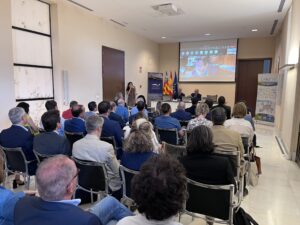
Source: IMO A virtual workshop on maritime decarbonization and Research and Development (R&D) in Latin America and globally was held in Panama (9 February). The workshop was organized by the IMO Coordinated Actions to Reduce Emissions from Shipping (IMO CARES) project and MTCC-Latin America with the aim of highlighting the role of green technologies in achieving more sustainable shipping.  Maritime experts and sector specialist speakers discussed green energies and technologies (such as wind propulsion systems and solar energy); alternatives fuels (such as ammonia and hydrogen); the relevance of innovation, research and data collection to tackle emissions; the need for financial investments and collaboration withing stakeholders; and the importance of capacity building and inclusion, so no one is left behind in the journey towards decarbonization in the Latin America region and internationally.   Over 200 participants from around the world also learned about how the IMO CARES project can help to support technology transfer globally, by bringing together stakeholders in the maritime sector and technology providers to help solving challenges in the work towards emission reductions.   The objective of the IMO CARES project is to link the research and development initiatives in the Global North and the Global South to accelerate demonstration of green technologies and promote

Leer más »
New hydrogen project for the port railways

Source: Port of Hamburg Joint project “sH2unter@ports” researches implementation of a hydrogen-powered shunting locomotive . The question of how the operation of shunting locomotives in the port can be implemented in a climate-neutral way is now being addressed by a new joint project consisting of six partners from science and industry. The innovative research and development project will be launched at a kick-off meeting in Bremen on 26 January. The cooperation partners are made up of Eisenbahnen und Verkehrsbetriebe Elbe-Weser GmbH (evb), the Smart Mobility Institute at Bremerhaven University of Applied Sciences, the Institute for Energy and Circular Economy at Bremen University of Applied Sciences GmbH (IEKrW), Alstom, bremenports GmbH & Co. KG (bp) and the Hamburg Port Authority AöR. The project partners are working together on the goal of converting shunting locomotives in Bremen and Hamburg port areas to hydrogen operation. The prerequisites and requirements for the conversion are to be researched, the conditions for refuelling determined and safety and legal issues clarified. At the end of the project there will be a concrete implementation plan. The project should make an important contribution to achieving CO2 neutrality in the port by 2035. While passenger rail transport is already predominantly

Leer más »
Supporting European framework for hydrogen import infrastructure crucial to meet REPowerEU targets on time

Source: Port of Rotterdam The import of renewable and low carbon hydrogen is paramount if Europe is to end its dependency on Russian fossil fuels and realize its climate objectives in 2030. In REPowerEU, the European Commission rightly acknowledges the need for imports from outside Europe to complement local production of hydrogen and intra-EU hydrogen trading. Diversification of resources and the establishment of new maritime trading routes is key to ensure Europe’s energy security and diversify new, clean energy flows. A group of companies in the Rotterdam industrial cluster, including the Port of Rotterdam, OCI, Koole, Air Products, Shell, Vopak, VTTI and Votob has issued a joint statement asking European policymakers for a technology-neutral regulatory framework that supports investments of first-movers in import infrastructure in ports, facilitates the deployment of new and existing pipeline infrastructure and supports the set-up of new maritime import corridors. The signatories of this statement call upon EU policymakers and Member States to urgently:

Leer más »
Hydrogen-Powered Ships Are Coming. How Green Is Your Cruise?

Source: CLIA In the Caribbean, many cruise companies have bought islands and turned them into private resorts for the exclusive use of cruise passengerswho cavort in enormous wave pools, rush down 135-foot water slides with names like Daredevil’s Peak, and zip-line across wide beaches. But on Ocean Cay, an island 20 miles south of Bimini that MSC Cruises began leasing from the Bahamian government in 2015, there is no theme park, no giant water slide. Oh, there are plenty of bars, shops and wave runners. But the general aim is to provide a serene getaway and largely quiet activities — snorkeling, swimming and lounging on beach chairs — while scientists and students from the University of Miami and Nova Southeastern University in Fort Lauderdale research how toreverse the decline in coral reefs and develop reefs that can withstand climate change. MSC, which has a 100-year lease with the Bahamian government, invested $200 million to transform the island from a barren industrial site that had once been used to mine sand into a 103-acre haven of native plants and trees, surrounded by a 64-square-mile marine reserve. The island, according to MSC, is the centerpiece of an overall plan to make the company

Leer más »
Maersk Asia Pacific market update (January 2023)

Source: Maersk Keep your cargo sailing smoothly, with valuable insights from our Asia-Pacific Market Update for January The global demand outlook shows little sign of any short-term improvement. The developed nations are still facing inflationary and recessionary pressures which is dampening the outlook in Asia. Container demand has continued to fall with volumes back to pre-pandemic levels. But there may be reasons for optimism. The ending of China’s rigid COVID-19 restrictions, while leading to a surge in new cases in the near-term, has also led to predictions of a surge in demand and trade from the second half of 2023. Looking to the future, Maersk is also investing $174 million in a green and smart warehouse complex in Shanghai’s Lingang district to cope with future global and regional logistics demand. If there are new topics you would like to talk about, please let us know by filling out our survey from here. Market Trends Key manufacturing indicators remained largely flat in December and the short-term outlook remains depressed. Both the Global Composite Purchasing Manager’s Index (PMI) and global manufacturing orders were virtually unchanged in December compared with November, with the Global PMI standing at 48.2 compared with 48.0 in November. The

Leer más »
San Pedro Bay Ports release final drayage truck feasibility assessment

Source: Port of Long Beach STUDY EVALUATES STATE OF TECHNOLOGY, INCORPORATES STAKEHOLDER FEEDBACK The ports of Long Beach and Los Angeles have released a final report on the current state and overall feasibility of using clean, heavy-duty drayage truck technology throughout the San Pedro Bay port complex. The Final 2021 Feasibility Assessment for Drayage Trucks can be downloaded from the Clean Air Action Plan (CAAP) website, cleanairactionplan.org/strategies/trucks. The ports released a draft assessment in August 2022 for public review and comment. The 2021 assessment builds upon the inaugural 2018 assessment and examines the current state of technology, operational characteristics, economic considerations, infrastructure availability and commercial readiness related to zero-emissions (ZE) and low-emissions drayage trucks. The final report addresses feedback from a diverse group of stakeholders.  The 2017 CAAP Update established goals of ZE drayage trucks by 2035 and ZE terminal equipment by 2030. As part of this strategy, the ports committed to developing feasibility assessments every three years to inform a joint approach to meeting those goals.  The ports are working to accelerate the adoption and transition to ZE technologies and developing the necessary infrastructure. Currently, the ports are demonstrating 91 pieces of terminal equipment, including ZE yard tractors, top handlers,

Leer más »